
By Mike Demos, OpExChange Coordinator for the SCMEP
On November 18, the OpExChange traveled to Florence for a visit to one of South Carolina’s most quietly influential manufacturing institutions – the Southeastern Institute of Manufacturing Technology, or SiMT. Although SiMT joined the OpExChange just over a year ago, their impact on the state’s manufacturing landscape stretches back much further. For nearly two decades, they have played a dual role that few organizations can claim: they are both a manufacturing services provider and a workforce engine, embedded directly within Florence-Darlington Technical College (FDTC).
This visit was intended to highlight their 3D printing operations, but in true SiMT fashion, the tour became something much broader. We explored a facility that blends industry-grade production, education, prototyping, machining, metrology, and innovation under one roof – all with a mission ultimately about people.
A Mission Rooted in the Future of Manufacturing
Before stepping onto the shop floor, OpExChange members gathered for a presentation by SiMT Associate Vice President Tressa Gardner, who framed the institute’s mission in simple, compelling terms:
“If South Carolina is going to continue growing its manufacturing base, it must grow its workforce alongside it.”
SiMT was created to meet that challenge. Founded in 2007, the 177,000-square-foot facility was designed to serve two audiences simultaneously. On one side, it acts as a service provider for manufacturers seeking production support, prototyping, machining, 3D printing, and design engineering. On the other, it functions as a training ground for students and future workers. This “teaching hospital” model ensures that graduates are ready to step directly into high-tech roles, fully prepared for the realities of modern manufacturing.
Inside the Technology: A Tour of SiMT’s Operations
Walking through the facility, it quickly became clear that SiMT is more than just a set of classrooms or labs. It is a full industrial ecosystem. The machining center houses an array of CNC mills, lathes, and multi-axis systems capable of producing live customer jobs ranging from aerospace components to custom industrial fixtures. Students work on similar machines on the academic side of the facility, with a front-row view of real manufacturing activity helping bridge the gap between education and industry.
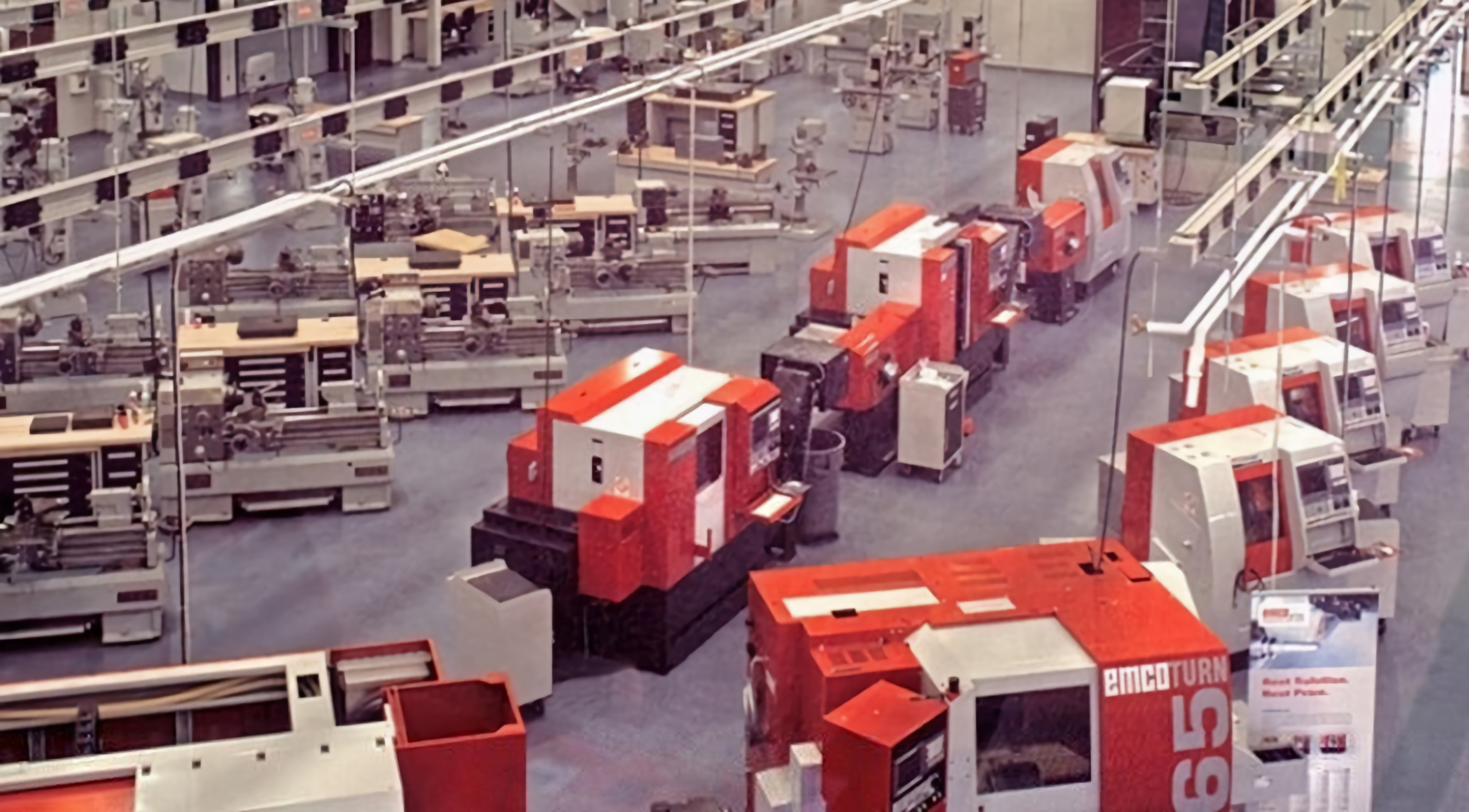
The highlight of the tour, and the part that sparked the most discussion, was the advanced additive manufacturing lab.
Here, SiMT offers industrial-grade 3D printing capabilities that many manufacturers cannot access in-house.
Members saw equipment capable of producing complex geometries in metals such as aluminum and stainless steel, as well as high-performance polymers like heat-resistant nylon.
The lab supports rapid prototyping, small-batch production, and end-use part fabrication, giving companies the flexibility to iterate designs quickly and bring products to market faster.
Our guides shared examples of clients in aerospace, medical, and industrial sectors who rely on SiMT to produce components that would otherwise be prohibitively expensive or technically challenging.
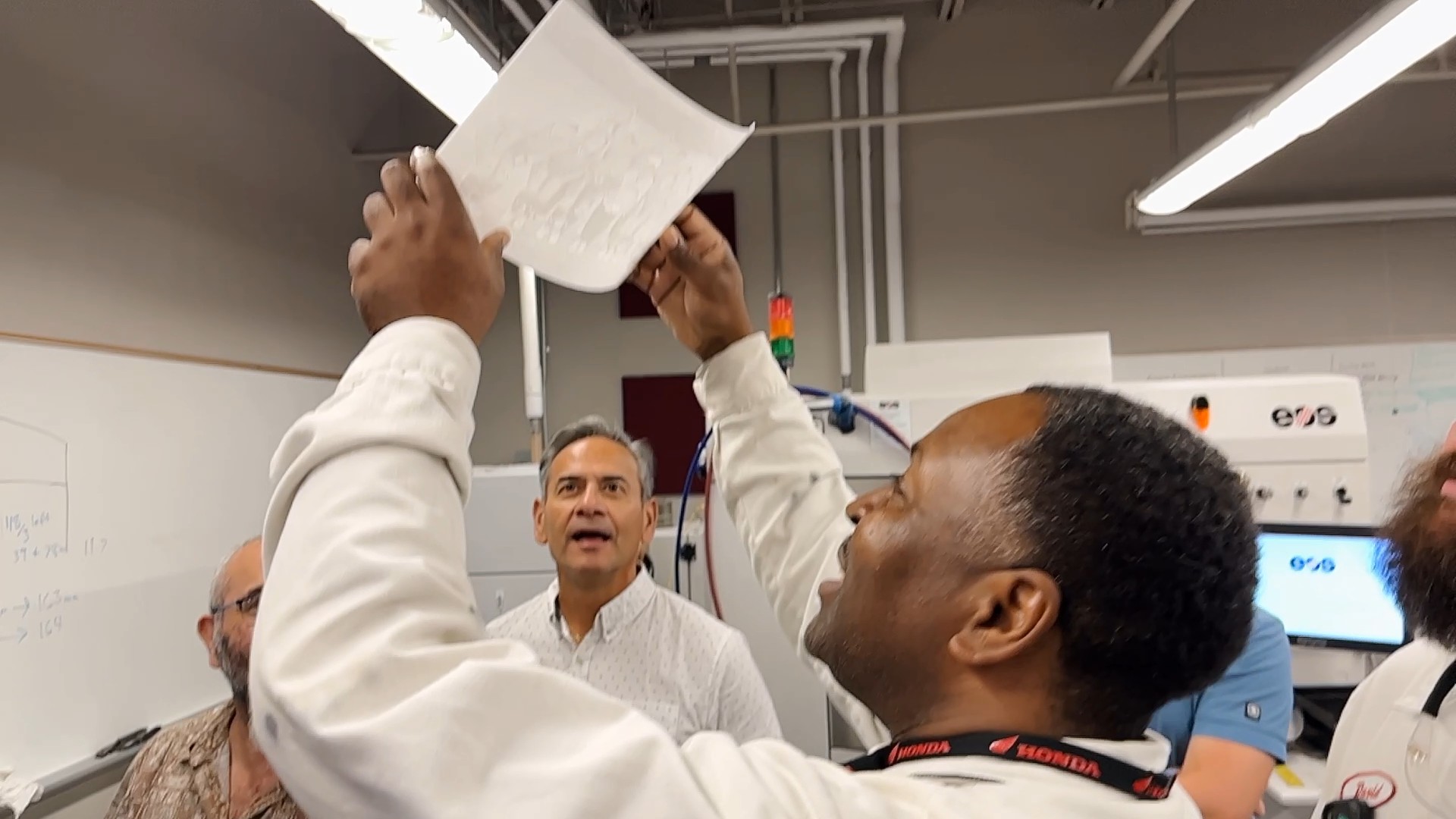
OpExChange participants marvel at the detail captured in this SLS 3D print.
In addition to producing physical parts, the lab provides design-for-additive consulting, helping engineers optimize CAD models for 3D printing, reduce material waste, and improve performance. This integration of technology, training, and consultation illustrates how SiMT not only enables advanced manufacturing but also accelerates innovation for regional companies.
Adjacent to the main manufacturing space, the Charles W. Gould Business Incubator stood out as another vital component of SiMT’s mission. The incubator provides entrepreneurs and small businesses with dedicated space, access to industrial-grade equipment, and engineering support to bring new products to market. Over the years, more than 180 companies have utilized this incubator, turning ideas into commercial realities and contributing to the regional industrial ecosystem.
From the Classroom to the Factory Floor
What truly distinguishes SiMT is not only its advanced technology, but the way it connects education with real industrial practice—without overlapping the two. As Tressa explained, the academic programs at FDTC maintain their own dedicated training labs, where students in machine tool technology, industrial maintenance, engineering technology, and related programs learn on equipment selected specifically for instruction. While separate from SiMT’s production machinery, these training environments are intentionally designed to reflect modern manufacturing setups, giving students a practical and relevant foundation before entering the workforce. This alignment ensures that graduates are better prepared, reducing onboarding time for local employers and strengthening the regional talent pipeline.
Beyond its credit programs, SiMT also supports the upskilling of incumbent workers through a wide range of continuing education courses—covering robotics, industrial automation, leadership development, supervisory skills, and project management. By blending technical training with the soft skills required in today’s advanced manufacturing environments, SiMT helps both new entrants and seasoned workers thrive in an increasingly automated, technology-driven industrial landscape.
Supporting South Carolina’s Manufacturing Ecosystem
SiMT’s impact extends far beyond its walls. By providing production services, workforce training, and innovation support, it serves as a vital resource for manufacturers across the state. Companies turn to SiMT not only for prototyping and specialized production, but also for consulting, process improvement, and technology adoption. Through these partnerships, the institute plays a direct role in improving productivity, quality, and competitiveness in the region.
Moreover, SiMT actively engages with initiatives in advanced manufacturing, digital technologies, and transportation, distribution, and logistics. By connecting students and companies to Industry 4.0 technologies – including IoT, AI, and data analytics – the institute ensures that South Carolina’s workforce remains aligned with global industrial standards. Partnerships with organizations like the Clean Energy Smart Manufacturing Innovation Institute (CESMII), Axiom Manufacturing Systems, and SCMEP demonstrate SiMT’s role as both a technological and educational bridge.
A Living Example of People, Process, and Technology
Throughout the visit, one theme became crystal clear: technology alone does not drive competitiveness; people do. SiMT invests in cutting-edge machines, 3D printing systems, and software, but the true differentiator is the team – instructors, engineers, technicians, and project managers who bring those tools to life. Together, they create an environment where innovation is not theoretical, but practical, applied, and accessible to manufacturers who need real solutions now.
Conclusion: A Resource Every Manufacturer Should Know
The OpExChange visit to SiMT was more than a tour; it was a vivid illustration of what makes South Carolina manufacturing strong. SiMT is a workforce engine, an innovation hub, a contract manufacturer, and a training center all at once. It strengthens companies, supports economic growth, and prepares the next generation of skilled professionals.
For members of the OpExChange, the lesson was clear: investing time and attention into understanding and partnering with institutions like SiMT is not just beneficial – it is essential for regional competitiveness. The institute’s blend of people, process, and technology provides manufacturers with both immediate solutions and a long-term pipeline of talent, ensuring that the Pee Dee region remains a hub for advanced manufacturing for years to come.
About SiMT
The Southeastern Institute of Manufacturing Technology (SiMT), located on the Florence-Darlington Technical College campus in Florence, South Carolina, operates as a hybrid state–academic institution. Founded in 2007, its mission is to support regional industry through advanced manufacturing services, workforce development, and technology innovation.
Key capabilities at SiMT include industrial-grade additive manufacturing (metal and polymer 3D printing), high-precision CNC machining, and tailored training programs. By combining commercial-scale production with academic programs and a business incubator, SiMT helps manufacturers prototype and scale products while also preparing a highly skilled workforce for South Carolina’s evolving industrial landscape. https://simt.sc.gov/
Reference Section for OpExChange members
OpExChange Members – Access Videos and Pictures from the visit on the OpExChange Portal. This is open to OpExChange member sites. (If you cannot access the Portal, request login instructions from Mike Demos.)
Be the first to comment on "SiMT in Florence: Where Advanced Manufacturing Meets Workforce Development"