By Mike Demos, OpExChange Coordinator for the SCMEP
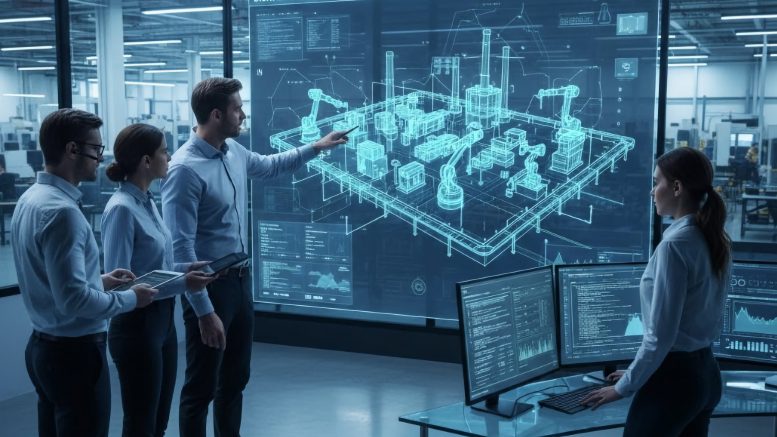
In the OpExChange, we’ve seen how powerful visualization can be in driving improvement. One of the most exciting tools helping manufacturers do just that is digital twin simulation modeling – a method that allows teams to test, refine, and de-risk decisions before they make them.
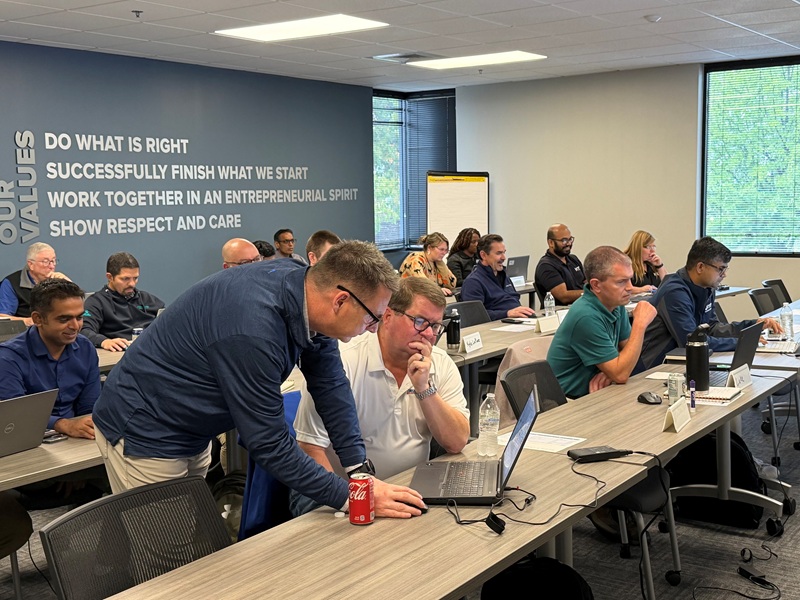
On October 29th, Jason Merschat, founder of APO, wrapped up his fourth and final OpExChange workshop of the year on building a digital twin using simulation modeling. Each of Jason’s sessions has drawn strong participation from manufacturers across South Carolina, helping leaders understand not only what is possible with this technology but also how to put it into practice.
This wasn’t a lecture – it was a hands-on, half-day workshop. Participants brought their own laptops, built their own simulation models, and learned by doing. The room was filled with dialogue, problem-solving, and shared “aha” moments as attendees saw processes come to life on screen.
Jason’s journey into simulation modeling started in the steel mills of Pittsburgh and evolved through roles in nanotechnology, IBM consulting, and leadership across multiple industries. With that blend of blue-collar grit and data-driven curiosity, he’s become a facilitator who helps organizations turn good ideas into executable systems. “I’m just the train that gets them home,” he says.
In his workshop, Jason walked participants through how a digital twin – a virtual representation of a plant or process – can model real-world complexity in a safe digital space. Unlike spreadsheets or static models, a simulation captures variability: machine downtime, labor fluctuations, product mix, and even seasonality. As Jason put it, “When all that uncertainty stacks up the wrong way, is your system still going to work?”
Using tools like FlexSim ®, participants learned to visualize how materials, people, and machines interact across time. The models they built became living environments where they could test “what if” questions, such as:
- What happens if demand spikes at the end of the year?
- Where are our true constraints – and how do they shift with product mix?
- How would adding a new machining center affect throughput and ROI?
Jason emphasized the integration of Lean, Six Sigma, and digital tools – a maturity model that evolves from stabilizing processes to optimizing and simulating them. His mantra: “Stabilize, then optimize.” Once a process is stable, a digital twin helps leaders experiment, validate assumptions, and make data-informed investments without interrupting production.
The workshop was not just about software – it was about understanding how to use it to create value. Whether modeling a new greenfield plant, reconfiguring an existing line, or analyzing logistics flow, simulation gives organizations a chance to “see the future before they build it.”
For OpExChange members, this capability represents the next frontier of continuous improvement. It’s a way to connect the dots between process excellence and digital transformation – without losing sight of the people who make it happen.
Jason has been offering these sessions across South Carolina through a partnership between APO and the South Carolina Manufacturing Extension Partnership (SCMEP). While this was his final OpExChange workshop for the year, companies interested in exploring simulation modeling and digital twin applications can reach out to their regional SCMEP Vice President to learn more about bringing Jason in for on-site support.
A heartfelt thank you to Jason Merschat for so graciously helping to educate the manufacturers of South Carolina. As a former COO for an OpExChange member company, Jason truly understands the power of this peer-to-peer network and continues to embody its mission – helping manufacturers learn, share, and grow together.
As manufacturers continue to balance people, process, and technology, digital twins are quickly becoming one of the most valuable tools for understanding–and shaping–the future of operations.
About OpExChange
The OpExChange, a program of the South Carolina Manufacturing Extension Partnership (SCMEP), is the only peer-to-peer network of manufacturers and distributors across South Carolina. For over 23 years, this collaborative group has helped member companies improve performance through benchmarking, best practice sharing, and collective learning. Member companies regularly host site visits and events, offering real-world examples of industrial automation, lean manufacturing initiatives, workforce engagement, and leadership development. It is an invaluable resource for South Carolina manufacturers seeking to learn from others on similar operational excellence journeys.
If your company is interested in joining this collaborative effort to strengthen both your operation and South Carolina’s manufacturing community, reach out to Mike Demos at mdemos@scmep.org. Visit www.OpExChange.com for more information on joining and a list of upcoming plant visits.
Be the first to comment on "Building a Digital Twin: Seeing the Future Before You Build It"